Alice's Dream: Merge 3D Game
- 4.4
- Rating
- 5.00M
- Installs
- Free
- Price

 Analysis by App-foxy
I approached Alice's Dream: Merge 3D Game expecting a light puzzle to fill a few spare minutes, but its appeal is broader than a simple matching board. It combines merge-based problem solving with a story about restoring a dreamlike world, so each small puzzle decision feels connected to a larger project. My overall view is clear: this is a pleasant choice for players who enjoy calm progress, visual organization, and a gentle narrative, but it is less suitable for anyone looking for fast competition, deep strategic complexity, or a completely interruption-free experience.
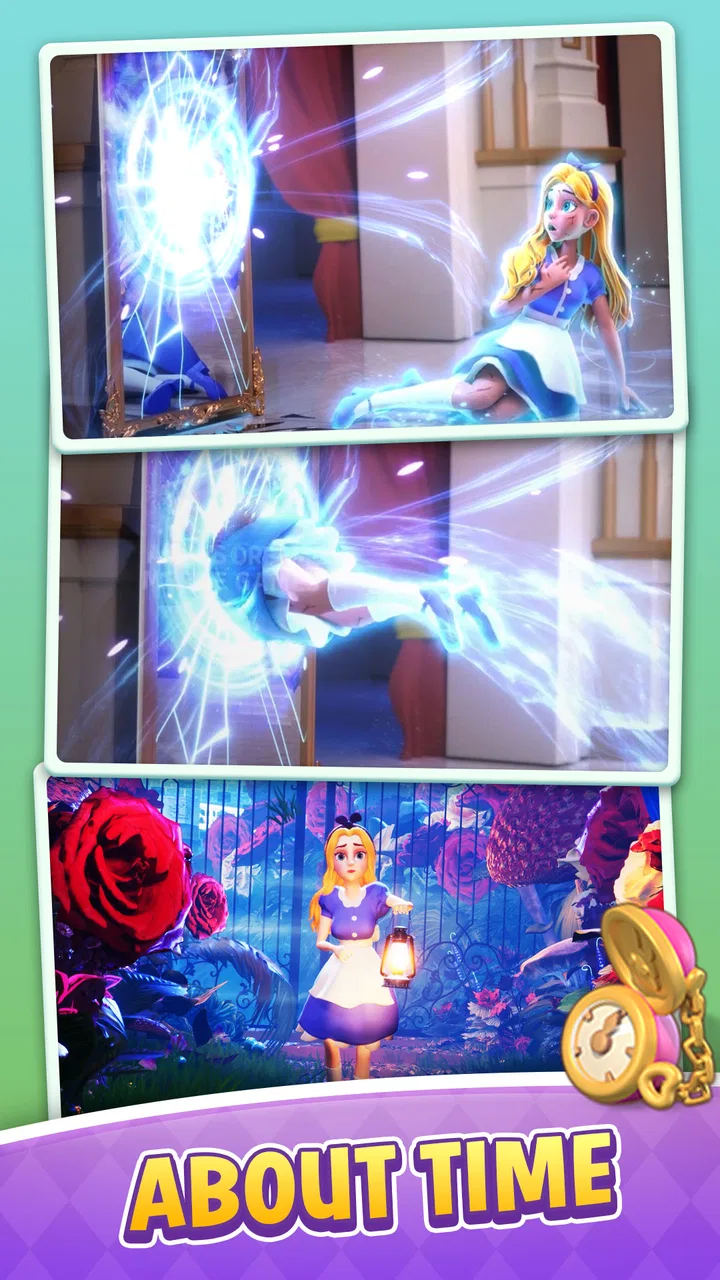
The central idea is easy to understand. You bring together matching objects, create improved items, and use the results to move the surrounding story forward. The familiar merge format makes the game approachable from the first session, while the island-building and fashion-family elements give the activity a sense of direction. I found that combination more effective than a puzzle that simply hands out points and sends me to the next level.
Gaming Laboratory has positioned the title as a free puzzle game for Everyone, and that description fits its relaxed presentation. It is available for Android users running version 7.0 or later, with the current version listed as 6.2.4. The game has also built a sizeable audience, with more than five million installs and an average rating of 4.4 from roughly seventy-one thousand ratings. Those numbers do not guarantee that every player will enjoy the same rhythm, but they do reflect a game that has found a dependable audience.
You May Also Like

 Blood Strike: 2.5 Anniversary
Blood Strike’s Loadouts Turn Every Drop Into a Tactical Gamble
A close look at Blood Strike’s custom loadouts: how fast access to signature weapons reshapes its battle royale rhythm, rewards preparation, and narrows the gap between fights.

 Pandora - Music & Podcasts
Pandora’s Music Is Easy to Start, but Harder to Recover
Pandora’s strength is its low-effort path from a seed to a station. Its weak spot is how much confidence it asks you to place in connection, setup, and quiet recovery.

 8 Ball Pool
 Is Built on Rivalries, Rematches, and Routine
A close look at the rivalries, rematches, shared routines, and unanswered safety questions that turn a quick pool match into a persistent mobile community.

 Samsung Music
’s Quiet Strength Is Playing What You Already Own
Its reach comes less from spectacle than from dependable access to a personal library. That simplicity is both the app’s strongest retention engine and its ceiling.

 AccuWeather: Weather Radar
AccuWeather Review: A Quick, Clear Forecast for Everyday Decisions
For everyday plans, the best forecast is the one you can understand quickly. AccuWeather makes rain timing, radar, and local conditions easy to act on, with a few trade-offs.

 Hill Climb Racing
Why Hill Climb Racing Still Turns Crashes Into One More Run
A tiny car, a bumpy hill and one more upgrade: Hill Climb Racing keeps resurfacing because its simple chaos makes every near-miss feel personal.
More From Our News Desk
View All News


How the merge loop feels in everyday play
The most satisfying part of the experience is the sense of turning clutter into progress. At the beginning of a session, the board can feel busy, with separate objects competing for limited space. Matching them gradually creates a cleaner arrangement and more useful pieces. That simple transformation gives every move a visible result, which is why the game works well when I want something active enough to hold my attention without demanding complete concentration.
I especially like the way the puzzle layer supports the wider dream setting. The objects are not presented as meaningless tiles; they contribute to a world that is being developed. That context makes a successful merge feel more rewarding than a plain combination animation. It also gives me a reason to return after closing the game, because I am not only chasing a higher score. I am continuing a small restoration project.
A realistic use case is a short break between tasks. I can open the game, make a few combinations, decide which objects deserve board space, and stop without needing to remember a complicated control scheme. It also suits quiet evening play, particularly for someone who prefers gentle visual feedback over loud action. The Everyone rating supports that broad accessibility, although parents should still remember that the game includes optional purchases.
The controls are built around familiar touch actions, so the learning curve is mild. That matters because merge games can become frustrating when the interface gets in the way of planning. Here, the main challenge comes from deciding what to combine and what to keep, rather than figuring out how to operate the board. I could begin playing immediately, then improve my decisions naturally as I understood the value of space and timing.
One useful habit is to avoid merging automatically whenever two matching pieces appear. A quick combination may clear a little room, but it can also remove flexibility if the resulting item occupies a valuable position. I get better results when I first scan the whole board, identify several possible chains, and only then commit to the merge that opens the most useful area. This is a small change in workflow, but it makes the puzzle feel more deliberate.
Another practical tip is to treat empty space as a resource rather than as wasted capacity. In a merge game, a crowded board limits future choices. I try to create room before starting a long chain, even when that means delaying an attractive combination. This approach is particularly helpful during a busy session, when the temptation is to tap every available match immediately. The game becomes calmer and more manageable when I plan two or three moves ahead.
The story elements also influence how I pace myself. Because the game connects puzzle activity with building a dream world, I do not feel forced to rush through every available action. I can play in small bursts and still feel that the session had a purpose. Players who enjoy decorating, unlocking, or gradually shaping a setting will probably appreciate this structure more than players who view narrative as an obstacle between puzzle rounds.
Where the design earns its keep
The strongest design choice is the balance between familiarity and context. Merge mechanics are easy to recognize, yet the island, fashion, and family themes give the activity a distinct identity. I have played puzzle games where the board is enjoyable for a few minutes but quickly becomes interchangeable with dozens of similar titles. This one has a clearer reason for existing because the merging is tied to a continuing dream-themed journey.
The game is also approachable for mixed experience levels. Someone new to merge puzzles can understand the basic goal without reading a long explanation, while a regular player can look for better board management and more efficient combinations. That makes it suitable for sharing a device with a family member or recommending to a friend who wants a low-pressure introduction to the genre.
Its free entry point is another practical strength. I can install it and decide whether the visual style and progression suit me before spending anything. Optional purchases range from twenty-nine cents to ninety-nine dollars and ninety-nine cents per item, so the purchase scale is wide. I would advise setting a personal spending limit before becoming invested in the longer progression. The free starting point is helpful, but the presence of large optional items means the game should be approached as a free-to-play product rather than as a fully paid experience with no commercial pressure.
That distinction matters because different players have different expectations. If I am comfortable with a game offering optional ways to accelerate or support progress, the model is easy to live with. If I want every part of a puzzle game to be unlocked at one fixed price, I would be better served by a premium alternative. The right choice depends less on the quality of the merge mechanics than on how I feel about the surrounding purchase structure.
There is also a useful emotional difference between this title and a purely competitive puzzle game. I am not constantly comparing my performance with other players or reacting to a countdown. The relaxed story framing gives mistakes less weight. That makes it a good companion for winding down, especially when I want a game that provides small goals without turning a break into another stressful task.
The trade-offs that become clearer over time
The same relaxed structure that makes the game welcoming can make it feel repetitive for experienced puzzle fans. The basic pleasure comes from repeating a familiar cycle: find matching objects, combine them, use the outcome, and continue the world-building journey. If I need constantly changing rules or difficult logic problems, this loop may not provide enough variety. Its challenge is mainly about organization and progression, not about solving complex riddles.
That limitation is important when comparing it with usual alternatives in the puzzle category. A traditional match-three game may offer faster rounds, more immediate scoring, and a sharper arcade rhythm. A dedicated logic puzzle may demand more concentration and provide a stronger sense of intellectual difficulty. A premium puzzle adventure may deliver a more tightly controlled story without the same free-to-play structure. Alice's Dream sits between these options: more narrative and world-focused than a basic matching game, more relaxed than a competitive title, and less demanding than a serious logic puzzler.
I would not choose it for a commute where I only have a few seconds at a time and need a round that ends instantly. It is better when I can give the board enough attention to make sensible choices. Nor would I recommend it to someone who dislikes managing a growing collection of objects. The pleasure depends on arranging, combining, and deciding what deserves space, so that organizational element is not a side detail; it is the heart of the experience.
Another friction point is the gradual nature of the journey. The game is designed around continuing progress rather than a single compact challenge. That can be comforting, but it also means the satisfaction arrives in small steps. Players who prefer a clear ending after a handful of carefully designed levels may find the ongoing structure less rewarding. I enjoy the slow build, yet I understand why someone else might see it as a long loop without enough dramatic change.
My third practical tip is to separate “progress now” from “progress later.” When the board offers several possible combinations, I do not always choose the one that produces the most impressive-looking item. Sometimes the better move is the one that preserves lower-level pieces for future chains or keeps a useful area open. Thinking in terms of future options rather than immediate visual reward reduces dead ends and makes the session feel less dependent on luck.
For players concerned about spending, I recommend treating purchases as optional conveniences rather than part of the basic strategy. I first play long enough to understand whether I enjoy the core merge loop without assistance. If the game remains fun at that pace, any later purchase becomes a deliberate choice instead of a response to impatience. This is especially sensible because the listed purchase range reaches from small amounts to a substantially larger optional item.
Who will get the most from the game
The best audience is someone who likes casual puzzle games with a visible sense of development. If you enjoy taking a messy collection of pieces and gradually turning it into something more complete, the merge system should feel natural. The island setting and family-focused story also help if you want your puzzle sessions to have a little more personality than a sequence of disconnected boards.
It is a strong fit for players who prefer flexible sessions. I can play for a short period while waiting for an appointment, or settle in for a longer session when I want to make more careful progress. The touch controls and approachable premise make it easy to return to after a break, which is valuable for anyone who does not want a game that punishes them for forgetting a complicated system.
Families may also find the presentation accessible, given the Everyone content rating. Still, I would explain the optional purchase model before handing the game to a child, particularly on a shared device. The age rating describes the content, not a guarantee that every spending decision will be made responsibly. A simple device-level purchase control and a clear household rule are sensible companions to the game.
I would steer competitive players elsewhere. If your favorite puzzle experience involves leaderboards, rapid reactions, or difficult tactical pressure, this game may feel too gentle. I would also suggest a different option for players who want a fully self-contained premium adventure. The free-to-play format and gradual progression are central to the experience, not minor details that can be ignored.
Device compatibility is straightforward for a broad Android audience because the game supports Android 7.0 and newer. That makes it accessible on many older devices as well as more recent ones, although the feel of any mobile game can vary with screen size and hardware. I found the larger visual structure easier to manage on a device with enough display space to inspect the board comfortably. On a smaller screen, careful scanning becomes more important before committing to a merge.
The title is also a sensible recommendation for someone who has tried merge games but wants more atmosphere. The story and building elements provide a reason to care about the next step, while the core interaction remains familiar. Conversely, a player who already finds merge mechanics repetitive will probably not be converted by the added setting alone. The presentation improves the loop, but it does not replace the loop.
My verdict after weighing the full experience
Alice's Dream works because it understands the appeal of small, visible improvements. Each merge can tidy the board, create a more useful object, and support the larger dream-themed journey. I appreciate that it offers a calm alternative to frantic puzzle games without becoming completely passive. The best sessions are the ones where I slow down, protect my available space, and make combinations with the next few moves in mind.
Its weaknesses are equally clear. The core activity can become repetitive, the long-form progression will not suit everyone, and optional purchases mean the free experience should be judged with realistic expectations. Players seeking demanding logic, quick competitive rounds, or a one-time premium purchase have better alternatives. Those are not deal-breakers for me, but they define the audience carefully.
With a 4.4 average and an audience of over five million installs, the game has clearly connected with many casual puzzle players. I would recommend it to a friend who wants a relaxing merge adventure with a little story, especially if that friend enjoys organizing a board and watching a setting take shape. I would skip it for someone asking for intense challenge or a short, fully finished puzzle campaign.
My final recommendation is to try the free version with a planned, patient approach. Give the board management a fair chance, notice whether the dream-world progression motivates you, and decide early how you want to handle optional spending. If those conditions fit your habits, this is an inviting and accessible puzzle game from Gaming Laboratory. It is not the deepest game in its category, but it offers a comfortable rhythm and enough personality to make ordinary merge decisions feel worthwhile.
FAQs for Alice's Dream: Merge 3D Game
01What is Alice's Dream: Merge 3D Game?
Alice's Dream: Merge 3D Game is a casual puzzle and adventure title built around combining matching 3D objects. As you progress through the game, you merge items to complete tasks, unlock new areas, and help develop Alice’s colorful dream world. The gameplay is easy to understand, but later levels introduce more demanding objectives, limited space, and strategic decisions that make each merge more important.
02How do you play Alice's Dream: Merge 3D Game?
The main gameplay involves finding identical objects and merging them into more advanced items. You usually drag matching pieces together, clear space on the board, and use the resulting objects to fulfill orders or story-related goals. Planning is important because the play area can become crowded quickly. Combining items efficiently helps you avoid wasting energy, coins, or available storage.
03Is Alice's Dream: Merge 3D Game free to download and play?
Alice's Dream: Merge 3D Game can generally be downloaded for free on supported mobile devices, allowing you to begin playing without an upfront purchase. However, the game may include optional in-app purchases for currency, energy, boosters, or other helpful resources. Progress is possible without spending money, although free players may need to wait for energy regeneration or accept a slower pace.
04Does Alice's Dream: Merge 3D Game require an internet connection?
An internet connection may be required for several features, including synchronizing progress, loading advertisements, receiving events, processing purchases, and accessing online content. Some basic gameplay elements may work temporarily while offline, but the experience can be limited and progress may not update correctly. For the most reliable performance, it is best to play while connected to a stable Wi-Fi or mobile data network.
05Is Alice's Dream: Merge 3D Game suitable for children?
The game uses colorful visuals, simple controls, and a light fantasy setting that can appeal to younger players and casual gamers. Nevertheless, parents should review the store’s age rating and the game’s privacy and purchase settings before allowing children to play. Optional advertisements, social features, and in-app purchases may be present, so parental controls are recommended on shared or child-used devices.
Pros
- Relaxing merge gameplay with simple
- easy-to-learn controls.
- Colorful 3D visuals make objects easy to recognize.
- Story-driven progression gives purpose beyond completing puzzles.
- Many collectible objects provide variety during longer sessions.
- Playable in short bursts
- making it suitable for casual gaming.
Cons
- Energy or waiting systems may interrupt extended play sessions.
- Later levels can become repetitive without much gameplay variation.
- Some upgrades and progress may encourage in-app purchases.
- The 3D scenes can feel crowded when many objects are placed together.
- Performance and loading times may vary on older mobile devices.

Alice's Dream: Merge 3D Game
Gallery